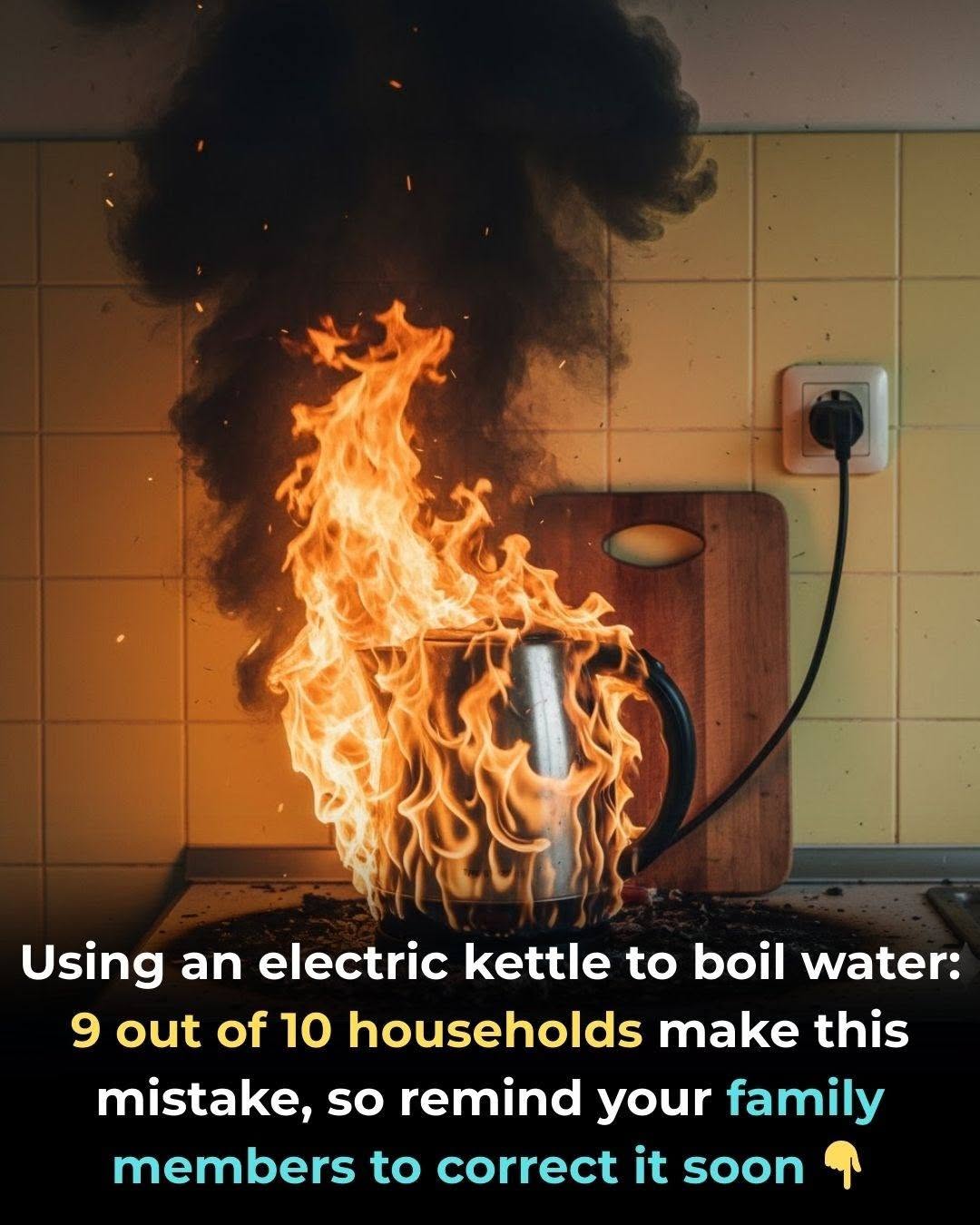
The claim that “9 out of 10 households make this electric kettle mistake” is a common viral-style headline, but there is no reliable evidence that such a statistic is true. However, there are some common electric kettle mistakes that can affect safety, taste, and the lifespan of the appliance.
9 common mistakes to avoid when using an electric kettle:
- Overfilling the kettle
- Filling above the maximum line can cause boiling water to splash out or spill through the spout.
- Boiling the same water repeatedly
- Repeatedly reheating leftover water can affect taste. It is usually better to use fresh water when possible.
- Not cleaning mineral buildup
- Limescale from hard water can build up inside the kettle, affecting performance and leaving flakes in the water.
- Descaling with a suitable method (such as vinegar or a manufacturer-approved descaler) can help.
- Letting the kettle run dry
- Turning on an empty kettle can damage the heating element or trigger safety shutdowns.
- Ignoring the lid and filter
- The lid, spout filter, and interior should be cleaned regularly to prevent buildup.
- Leaving water sitting inside for long periods
- Emptying unused water and allowing the kettle to dry can help keep it fresher.
- Using the wrong type of cleaning products
- Avoid abrasive cleaners that can damage surfaces or leave residues.
- Placing the kettle base near water
- Keep the electrical base dry and away from sinks to reduce the risk of electrical hazards.
- Not checking for damage
- Cracked bodies, damaged cords, or faulty switches should be repaired or replaced.
Simple habit: Use only the amount of water you need, descale regularly, and keep the electrical parts dry. These small steps can make your kettle safer and help it last longer.
