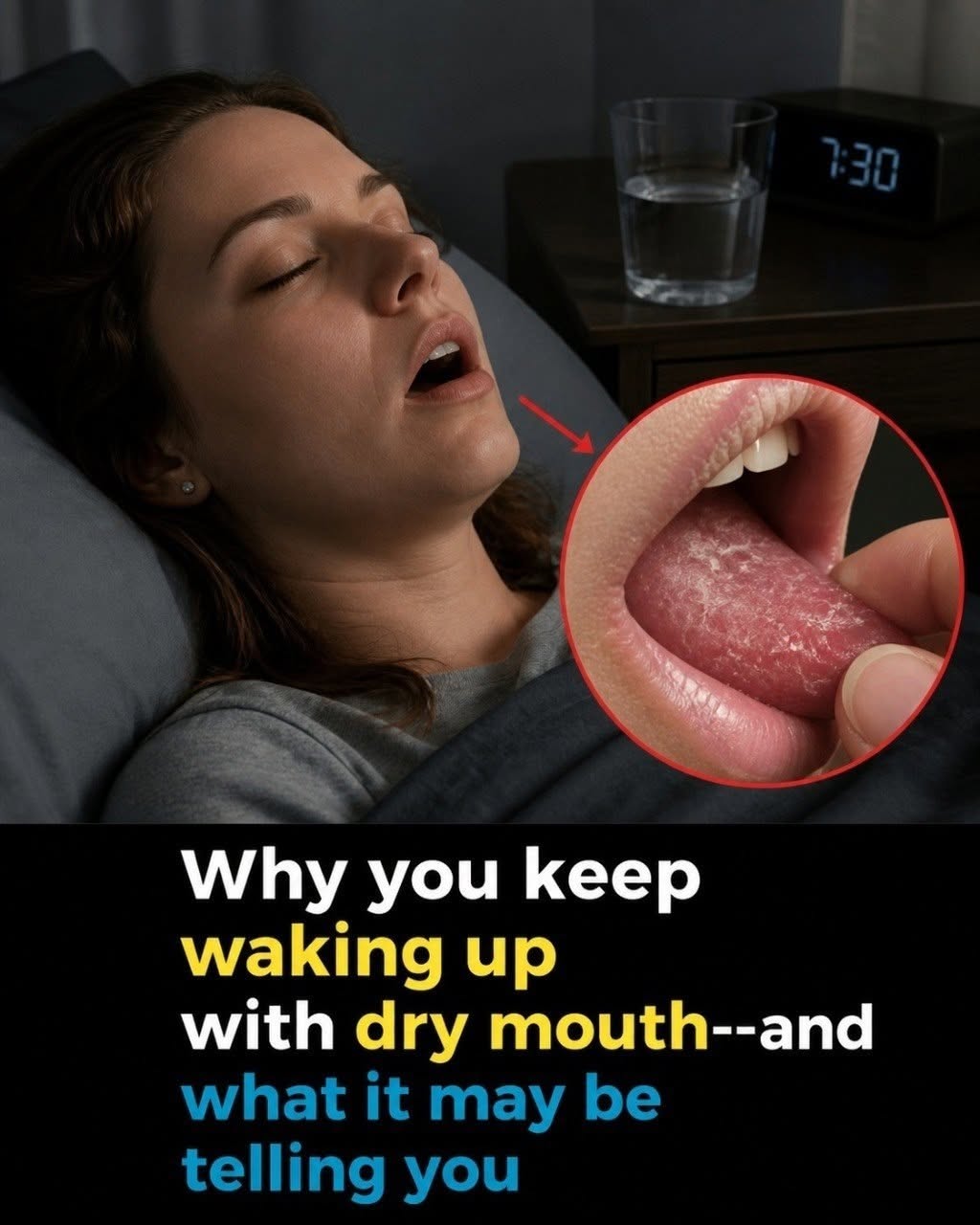
Waking Up With a Dry Mouth? Here’s What Your Body Might Be Telling You
Waking up with a dry mouth is common and often harmless, but it can sometimes be a clue that something is affecting your saliva production, breathing, hydration, or overall health.
Common reasons for dry mouth in the morning
1. Sleeping with your mouth open
- Mouth breathing (often from nasal congestion, allergies, or habit) allows saliva to evaporate during sleep.
2. Snoring or sleep apnea
- Loud snoring, gasping during sleep, morning headaches, and daytime tiredness can be signs of obstructive sleep apnea, which is associated with mouth breathing and dryness.
3. Dehydration
- Not drinking enough fluids, heavy sweating, alcohol intake, or sleeping in a dry environment can contribute.
4. Medications
Many medicines can reduce saliva production, including some:
- Antihistamines
- Antidepressants
- Blood pressure medications
- Decongestants
- Certain pain medicines
5. High blood sugar
- Persistent dry mouth, especially with increased thirst, frequent urination, fatigue, or unexplained weight loss, can be associated with diabetes.
6. Oral health issues
- Reduced saliva can increase the risk of:
- Tooth decay
- Gum irritation
- Bad breath
- Mouth infections
What you can try
- Drink enough water throughout the day.
- Use a humidifier if your bedroom air is dry.
- Treat nasal congestion if it contributes to mouth breathing.
- Avoid alcohol and tobacco, which can worsen dryness.
- Maintain good oral hygiene.
- Consider sugar-free gum or lozenges to stimulate saliva (if appropriate).
When to talk to a healthcare professional
Seek advice if dry mouth:
- Happens regularly for weeks or months.
- Is accompanied by excessive thirst or frequent urination.
- Comes with difficulty swallowing, mouth sores, or significant dental problems.
- Occurs with loud snoring, choking/gasping during sleep, or severe daytime fatigue.
A dry mouth alone usually does not point to one specific condition, but persistent symptoms can be worth investigating.
