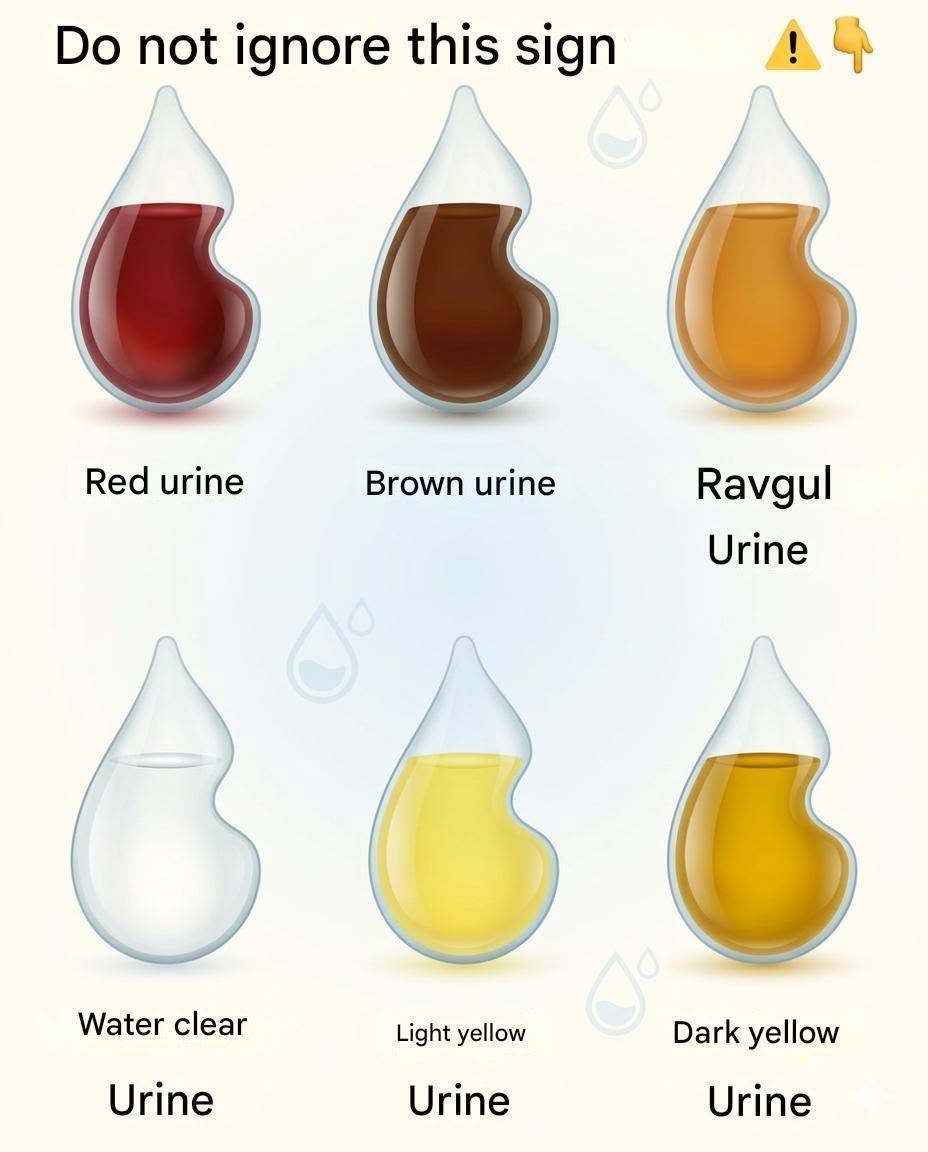
Urine color can provide clues about hydration, diet, medications, and sometimes health conditions. One unusual color doesn’t always mean something is wrong, but persistent changes or symptoms such as pain, fever, or blood should be evaluated by a healthcare professional.
Here’s a general guide:
| Urine color | What it may mean |
|---|---|
| Pale yellow to light gold | Usually a sign of normal hydration. |
| Dark yellow or amber | Often means you’re dehydrated and may need more fluids. |
| Clear | May mean you’re drinking a lot of water. Occasionally, persistently clear urine can have other causes. |
| Orange | Can result from dehydration, certain foods, or medications. In some cases, it may indicate liver or bile duct problems, especially if accompanied by pale stools or yellowing of the skin or eyes. |
| Pink or red | Can be caused by foods like beets or berries, certain medications, or blood in the urine. Blood should always be assessed by a healthcare professional. |
| Brown or tea-colored | May occur with severe dehydration, some medications, liver disease, or muscle injury. |
| Blue or green | Rare, but can be caused by certain medications, food dyes, or, less commonly, some infections or inherited conditions. |
| Cloudy or milky | May be due to crystals, dehydration, or a Urinary tract infection, especially if accompanied by burning or frequent urination. |
You should seek medical attention promptly if you notice:
- Red or cola-colored urine that isn’t explained by food or medication.
- Severe pain, fever, or difficulty urinating.
- Persistent dark brown urine.
- Cloudy urine with burning, fever, or a strong odor.
- A urine color change that lasts several days without an obvious cause.
Urine color is only one piece of the picture. Hydration, recent foods, supplements, medications, and other symptoms are all important when interpreting what it might mean.
