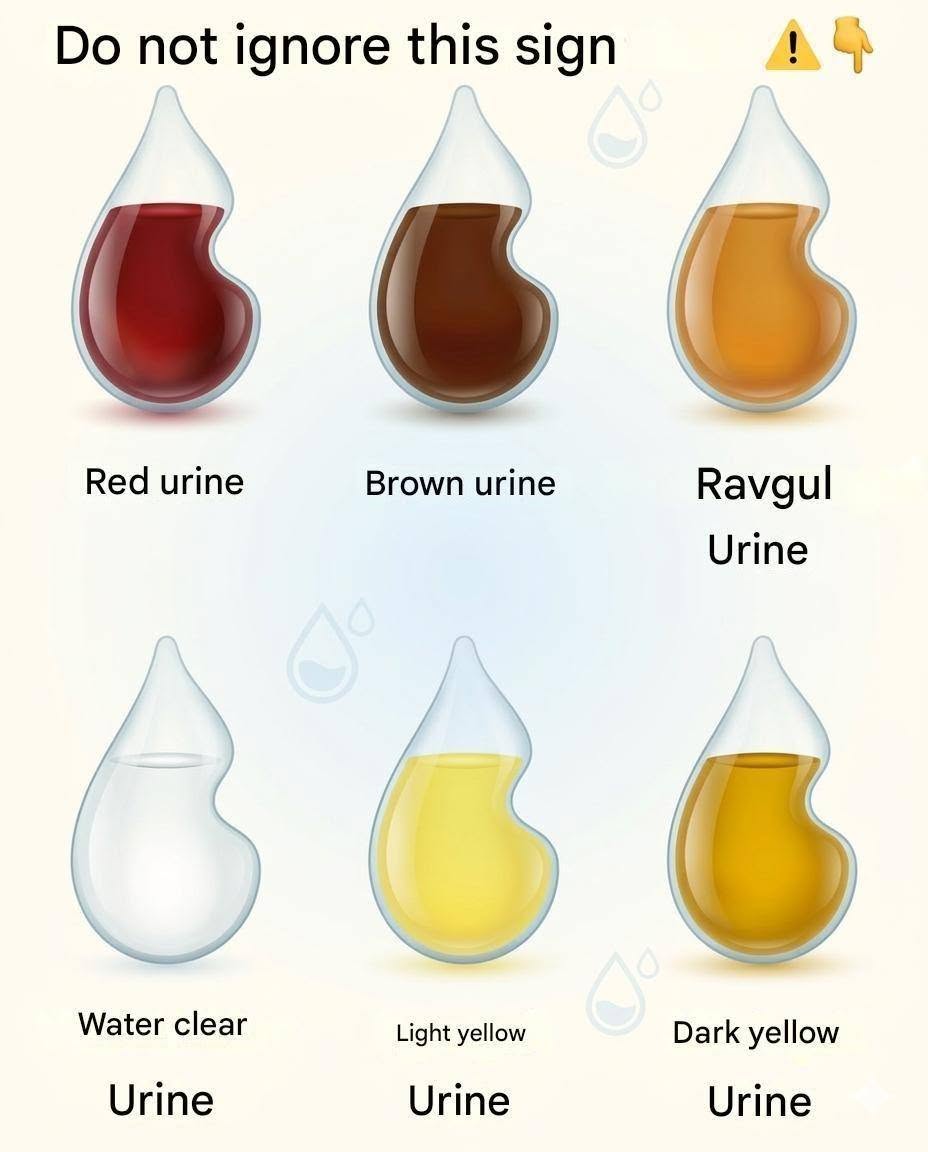
Urine color can be a helpful indicator of hydration and, in some cases, underlying health issues. However, diet, vitamins, and medications can also change urine color, so it’s important to consider the whole picture.
Here’s a general guide:
| Urine color | What it may mean |
|---|---|
| Pale yellow to light gold | Usually a sign of normal hydration. |
| Dark yellow or amber | Often indicates dehydration. Drinking more fluids may help if dehydration is the cause. |
| Clear | May mean you’re drinking a large amount of water. Persistently clear urine isn’t necessarily harmful but can occasionally have other causes. |
| Orange | Can be caused by dehydration, certain foods, supplements, or medications. Less commonly, it may be related to liver or bile duct problems. |
| Pink or red | May result from foods like beets or berries, some medications, or blood in the urine. If you don’t have an obvious dietary explanation, it’s important to seek medical evaluation. |
| Brown or tea-colored | Can occur with severe dehydration, some medications, liver disease, or muscle injury. |
| Blue or green | Rare, but may be caused by food dyes, certain medications, or, less commonly, some infections or inherited conditions. |
| Cloudy | May be due to crystals, dehydration, or a Urinary tract infection, especially if accompanied by pain, burning, or fever. |
When to seek medical care
Contact a healthcare professional promptly if you notice:
- Red or brown urine without an obvious cause.
- Blood or blood clots in the urine.
- Persistent changes in urine color lasting several days.
- Painful urination, fever, back pain, or difficulty urinating.
- Pale stools or yellowing of the skin or eyes along with dark urine.
Urine color is just one clue and cannot diagnose a condition by itself. If you’re concerned about a change in your urine color, especially if it’s persistent or accompanied by other symptoms, a medical evaluation is the best way to determine the cause.
