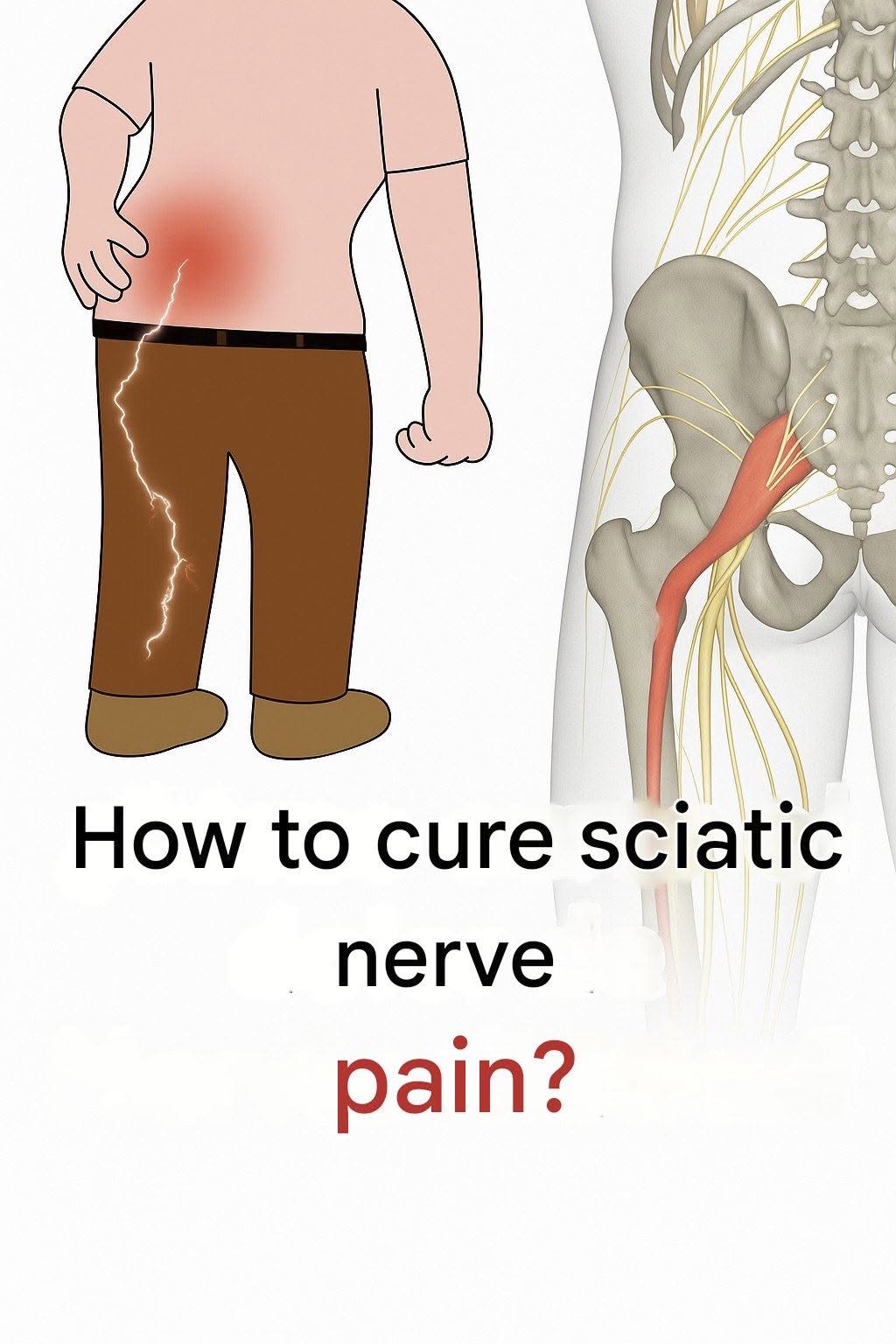
3 Exercises to Help Relieve Sciatica Leg Pain
Sciatica refers to pain that travels along the path of the sciatic nerve, typically from the lower back through the buttock and down the leg. It is often caused by irritation or compression of a nerve root in the lower spine.
For many people, gentle movement and specific exercises can help reduce pain and improve mobility. However, the best exercises depend on the underlying cause of the sciatica.
1. Knee-to-Chest Stretch
This stretch can help relieve tension in the lower back.
How to do it:
- Lie on your back with your knees bent.
- Bring one knee toward your chest, holding it with both hands.
- Hold for 20–30 seconds.
- Lower the leg and repeat with the other side.
- Repeat 2–4 times on each side.
Avoid pulling so hard that you increase leg pain.
2. Piriformis Stretch
If the muscles deep in the buttock are tight, this stretch may help reduce pressure around the sciatic nerve.
How to do it:
- Lie on your back with both knees bent.
- Cross one ankle over the opposite knee, forming a “figure 4.”
- Gently pull the supporting thigh toward your chest.
- Hold for 20–30 seconds.
- Repeat 2–4 times on each side.
You should feel a stretch in the buttock, not sharp pain.
3. Cat-Cow Stretch
This gentle movement improves spinal mobility.
How to do it:
- Start on your hands and knees.
- Slowly arch your back upward (cat).
- Then gently lower your belly while lifting your head and tailbone (cow).
- Move smoothly with your breathing.
- Repeat 10–15 times.
Helpful Tips
- Move slowly and avoid bouncing.
- Mild stretching discomfort is acceptable, but sharp or worsening leg pain is not.
- Stay active as much as your symptoms allow—prolonged bed rest is generally not recommended for most cases of uncomplicated sciatica.
- If sitting worsens your pain, stand up and walk briefly every 30–60 minutes.
When to Seek Medical Care Immediately
Get urgent medical attention if you have sciatica along with:
- New weakness in the leg or foot
- Loss of bladder or bowel control
- Numbness around the groin or buttocks (“saddle anesthesia”)
- Severe pain after major trauma
- Fever or unexplained weight loss with back pain
These symptoms may indicate a serious condition requiring prompt evaluation.
Bottom line
Gentle stretching and movement can help many people with sciatica, but recovery depends on the underlying cause. If your pain lasts more than a few weeks, is severe, or keeps returning, a healthcare professional or physical therapist can recommend exercises tailored to your condition.
