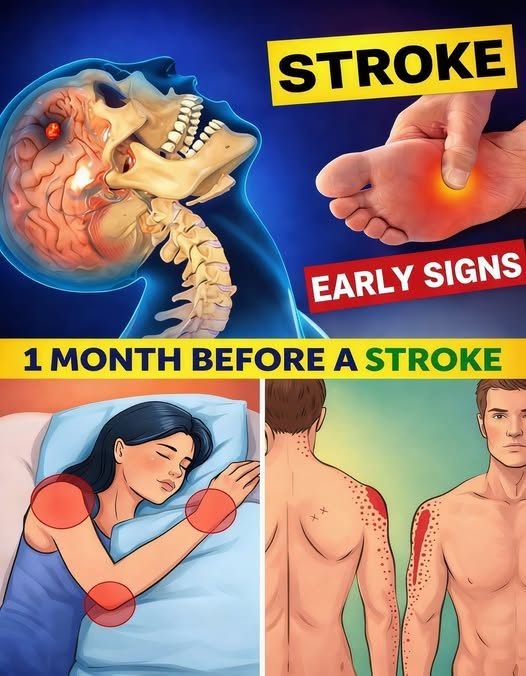
8 Warning Signs of Stroke That May Appear Beforehand & 9 Ways to Help Prevent It
A stroke often happens suddenly, but some people may experience warning signs before a stroke, sometimes called a transient ischemic attack (TIA) or “mini-stroke.” A TIA occurs when blood flow to part of the brain is temporarily blocked. Symptoms may disappear quickly, but it is still a medical warning sign that needs urgent attention.
There is no guaranteed set of symptoms that appears exactly one month before a stroke, but certain changes can occur in the days or weeks before some strokes—especially TIAs.
8 Possible Warning Signs to Take Seriously
1. Sudden weakness or numbness
- Weakness, tingling, or numbness on one side of the face, arm, or leg may be a warning sign.
2. Trouble speaking or understanding speech
- Slurred speech, difficulty finding words, or confusion can signal a problem with brain blood flow.
3. Sudden vision changes
- Blurred vision, double vision, or loss of vision in one or both eyes should be checked urgently.
4. Unexplained dizziness or loss of balance
- Sudden trouble walking, coordination problems, or severe unsteadiness can be stroke symptoms.
5. Severe or unusual headache
- A sudden, intense headache—especially one unlike previous headaches—may require immediate evaluation.
6. Facial drooping
- One side of the face may droop or feel numb. A simple check: ask the person to smile and compare both sides.
7. Episodes of confusion
- Sudden confusion, difficulty understanding others, or unusual behavior can be a warning sign.
8. Brief symptoms that disappear
- Symptoms lasting minutes and then resolving may still indicate a TIA and should not be ignored.
Remember FAST
Call emergency services immediately if you notice:
F — Face: Is one side of the face drooping?
A — Arms: Is one arm weak or numb?
S — Speech: Is speech strange or difficult?
T — Time: Get emergency help right away.
9 Tips to Help Reduce Stroke Risk
1. Control blood pressure
High blood pressure is one of the biggest risk factors for stroke. Check it regularly and follow your healthcare provider’s recommendations.
2. Don’t smoke
Smoking damages blood vessels and significantly increases stroke risk.
3. Stay physically active
Regular movement—such as walking, cycling, or strength training—supports heart and blood vessel health.
4. Eat a heart-healthy diet
Focus on:
- Vegetables and fruits
- Whole grains
- Beans and legumes
- Nuts and seeds
- Lean proteins
- Healthy fats
Limit excess salt, processed foods, and added sugars.
5. Manage cholesterol
High levels of LDL (“bad”) cholesterol can contribute to artery blockage.
6. Control diabetes and blood sugar
High blood sugar can damage blood vessels over time.
7. Maintain a healthy weight
A healthy weight can improve blood pressure, cholesterol, and blood sugar control.
8. Limit alcohol
Heavy alcohol use increases stroke risk. If you drink, discuss safe limits with a healthcare professional.
9. Keep regular medical checkups
Conditions such as irregular heartbeat (including atrial fibrillation), high blood pressure, and cholesterol problems can often be treated to lower risk.
Bottom line
A stroke can happen without warning, but recognizing symptoms quickly can save brain function and lives. Any sudden stroke-like symptom—even if it goes away—should be treated as an emergency.
