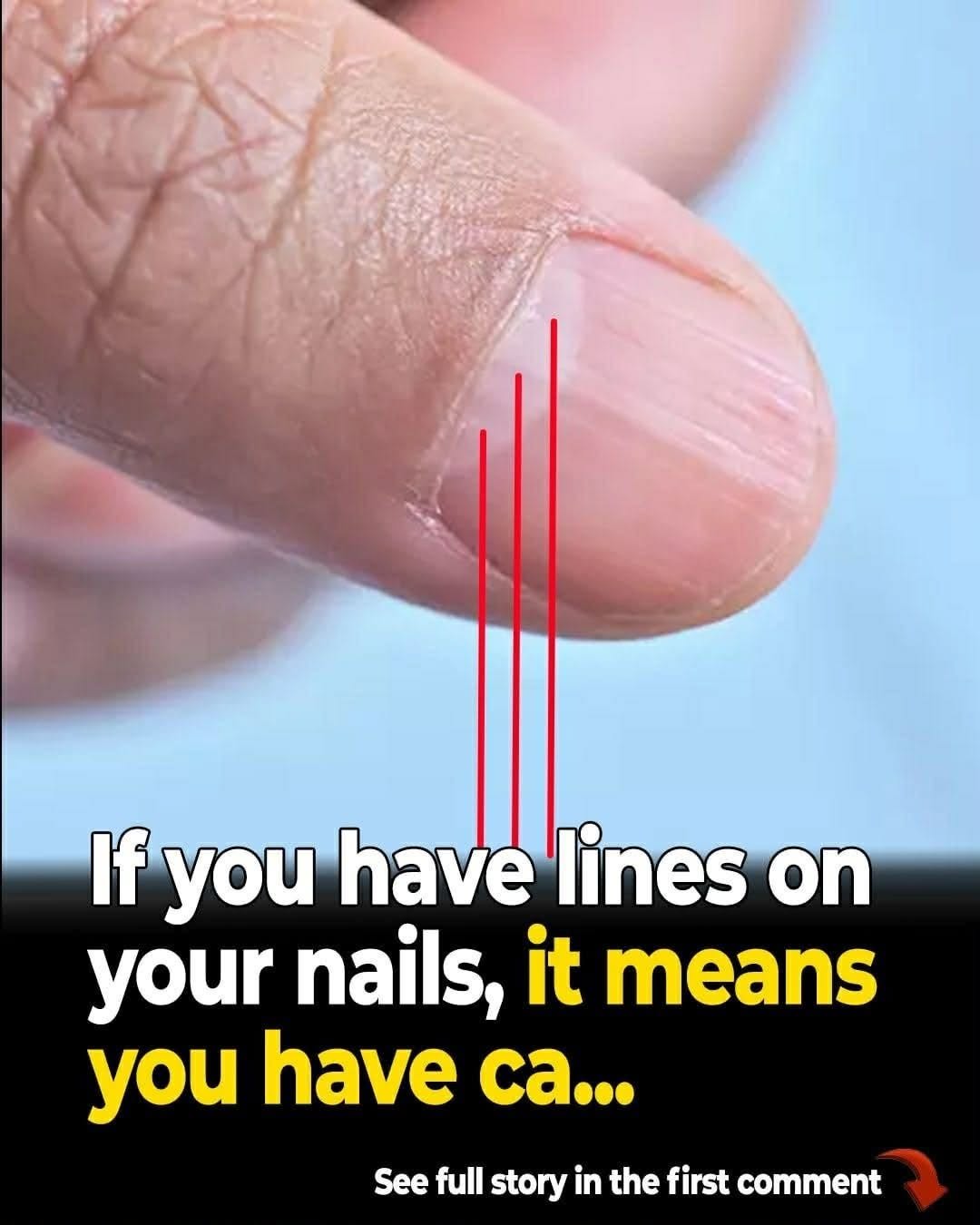
A Telltale Sign in Your Fingernails That May Reveal Clues About Your Health
You may have seen claims that a doctor can “predict your life expectancy” by looking at your fingernails. While fingernails cannot accurately predict how long someone will live, changes in the nails can sometimes provide clues about overall health and may signal conditions that deserve attention.
Here are some nail changes doctors pay attention to:
1. Pale or unusually white nails
Very pale nails may sometimes be associated with:
- Anemia (low red blood cell levels)
- Nutritional deficiencies
- Liver or other health conditions
2. Yellow nails
Yellowing can occur from:
- Nail polish staining
- Fungal infections
- Smoking
- Certain medical conditions
3. Clubbing (rounded, enlarged fingertips)
A widening or “bulb-like” fingertip with nails that curve downward can be linked to conditions affecting the lungs, heart, or digestive system.
4. Brittle or splitting nails
These may be related to:
- Aging
- Frequent exposure to water or chemicals
- Nutritional issues
- Thyroid problems in some cases
5. Deep horizontal grooves (Beau’s lines)
Grooves across the nails can appear after the body experiences significant stress, such as:
- Serious illness
- Major infection
- Injury
- Certain medical treatments
6. Dark streaks under the nail
A new, changing dark line should be checked by a healthcare professional because, in some cases, it can be a sign of a serious skin condition such as melanoma.
7. Spoon-shaped nails (koilonychia)
Nails that curve inward like a spoon may sometimes be associated with iron deficiency.
The bigger picture
Researchers do study visible signs of aging and health—including nail changes—but no single nail feature can determine life expectancy. Longevity depends on many factors, including genetics, lifestyle, medical conditions, environment, and access to healthcare.
If you notice a sudden nail change, a new dark streak, unexplained nail deformity, or changes along with symptoms like fatigue, weight loss, breathing problems, or pain, it’s worth discussing with a healthcare professional.
