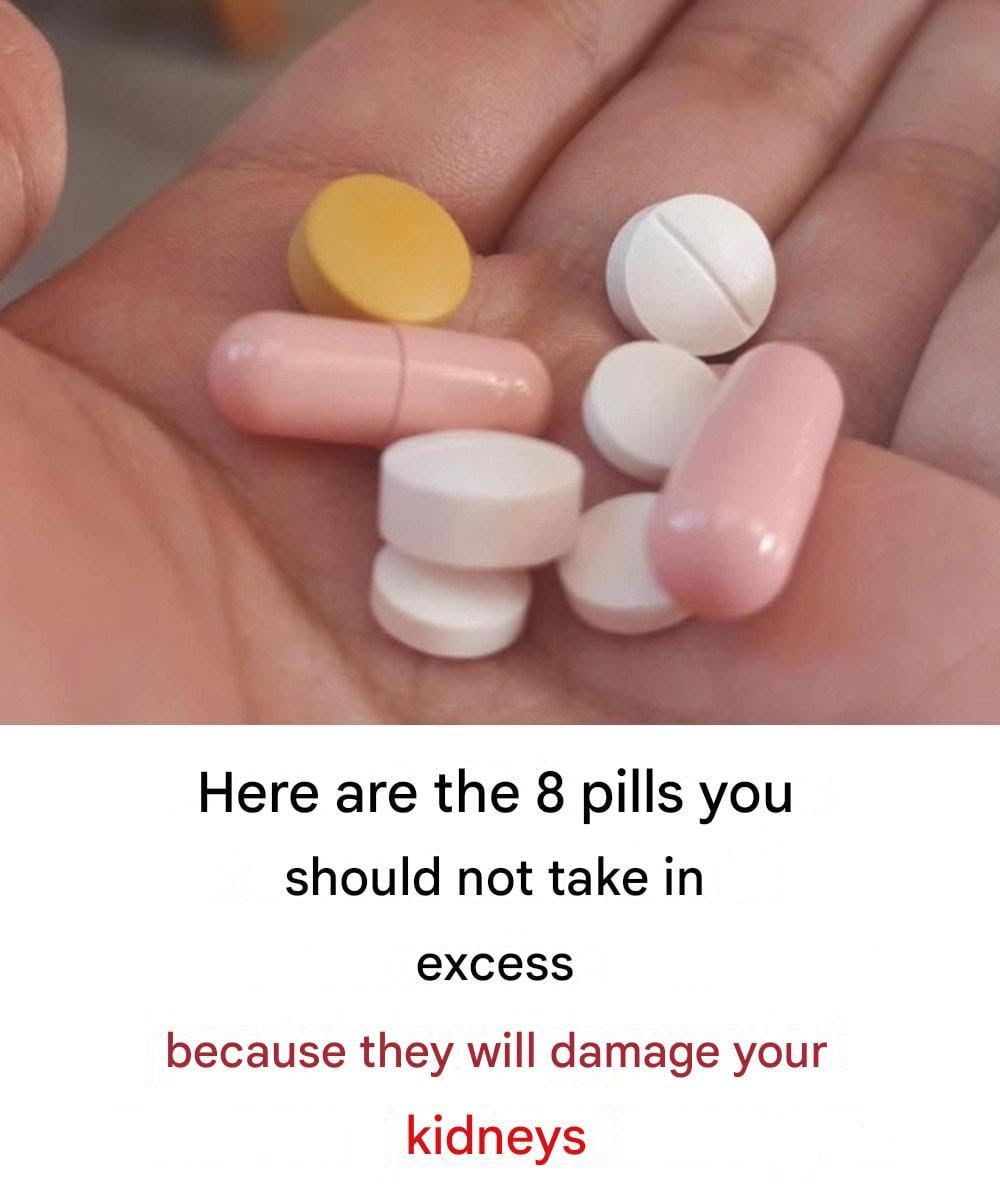
8 Types of Medicines That Can Affect Your Kidneys
The claim that there are “eight pills you should never take” is misleading. Many medications can affect the kidneys, but they are often safe and beneficial when used correctly and under medical supervision. The risk depends on the drug, dose, duration, your age, hydration, and whether you already have kidney disease.
1. NSAID pain relievers
Examples:
- Ibuprofen
- Naproxen
- Diclofenac
These can reduce blood flow to the kidneys, especially in people with kidney disease, dehydration, heart failure, or older age.
2. Certain antibiotics
Some antibiotics can affect the kidneys or require dose adjustments if kidney function is reduced. Your prescriber may monitor kidney function during treatment.
3. Some acid-reducing medications (PPIs)
Long-term use of proton pump inhibitors has been linked to certain kidney problems in some people, although the absolute risk is low and these medicines remain appropriate for many patients.
4. Diuretics (“water pills”)
These medications help remove excess fluid but can contribute to dehydration and electrolyte imbalances if not managed properly.
5. Some antiviral medications
Certain antiviral drugs are cleared by the kidneys and may need dose adjustments to avoid kidney injury.
6. Some chemotherapy drugs
Certain cancer treatments can affect kidney function, so regular monitoring is often part of treatment.
7. Lithium
Lithium, used for some mental health conditions, can affect kidney function with long-term use and requires regular blood tests.
8. Some herbal products and high-dose supplements
Some herbal remedies and supplements have been associated with kidney injury or may interact with prescription medications. “Natural” does not always mean safe.
How to protect your kidneys
- Take medications only as directed.
- Avoid taking more than the recommended dose of over-the-counter pain relievers.
- Stay well hydrated unless you’ve been told to limit fluids.
- Tell your healthcare professional about all prescription medicines, over-the-counter drugs, and supplements you take.
- Have your kidney function checked if you have diabetes, high blood pressure, or existing kidney disease.
Seek medical care promptly if you develop:
- Very little urine or no urine
- Blood in the urine
- Swelling of the legs, ankles, or face
- Severe fatigue or confusion
- Persistent nausea or vomiting
Do not stop a prescribed medication on your own. If you’re concerned about how a medicine may affect your kidneys, talk with the healthcare professional who prescribed it. They can assess your individual risk and adjust your treatment if needed.
