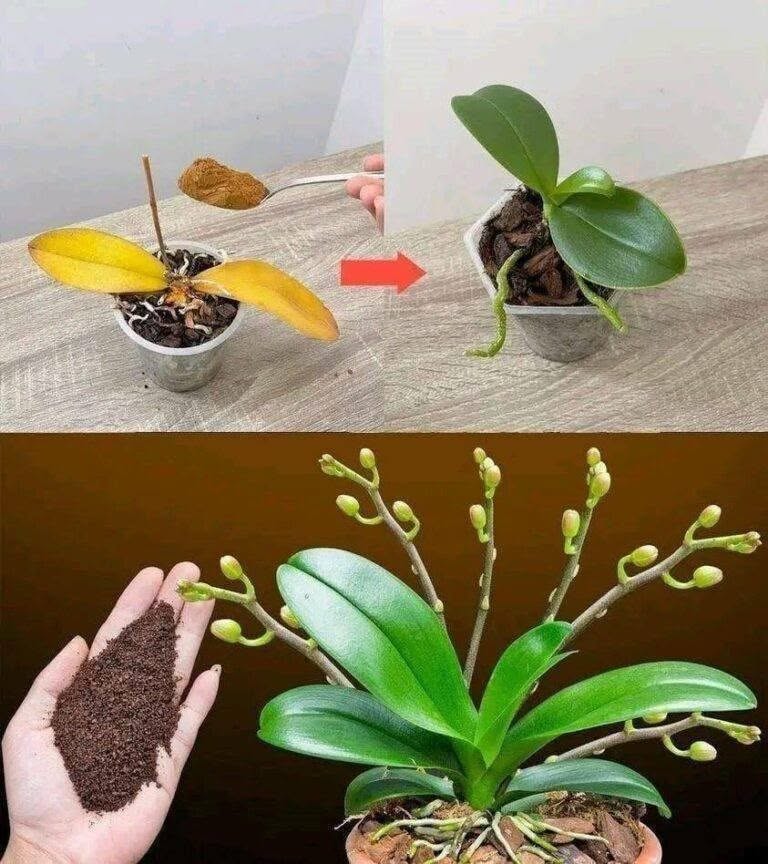
Just a Teaspoon, and Your Orchid May Bloom Better: The Truth About Simple Orchid Care
Orchids are known for their beautiful flowers, but getting them to bloom again can sometimes feel like a challenge. Many gardening tips online suggest that adding a small amount of a household ingredient—sometimes “just a teaspoon”—can make an orchid suddenly explode with flowers. While some homemade methods may help support plant health, there is no magic ingredient that can instantly force an orchid to bloom.
The secret to more flowers is understanding what orchids actually need.
What Helps Orchids Produce More Blooms?
1. Proper Light
Light is one of the most important factors for orchid flowering. Most common orchids, such as Phalaenopsis orchids, prefer:
- Bright but indirect sunlight.
- A spot near an east- or north-facing window.
- Protection from harsh afternoon sun.
Too little light often leads to healthy leaves but few or no flowers.
2. Correct Watering
Overwatering is one of the biggest causes of orchid problems.
A good routine:
- Water only when the potting mix is beginning to dry.
- Make sure excess water drains away.
- Avoid leaving water sitting in the center of the leaves, which can encourage rot.
3. Balanced Fertilizer
Orchids benefit from a proper orchid fertilizer rather than random kitchen ingredients.
A common approach is:
- Use a diluted orchid fertilizer during active growth.
- Follow the product instructions.
- Avoid overfeeding, which can damage roots.
4. Temperature Changes Can Trigger Flower Spikes
Many orchids bloom when they experience a slight difference between daytime and nighttime temperatures. A cooler night period can sometimes encourage the plant to begin forming flower spikes.
5. Healthy Roots Matter
Orchid roots are responsible for absorbing water and nutrients. Signs of healthy roots include:
- Firm, green or silvery roots.
- No mushy or dark rotten areas.
- A suitable orchid bark or airy growing medium.
What About the “One Teaspoon” Trick?
Some people recommend adding ingredients like sugar, baking soda, milk, or other kitchen products to orchid pots. These methods are not proven to reliably create more flowers and may sometimes harm the roots or disturb the soil environment.
A teaspoon of the right orchid fertilizer, used correctly, can support flowering—but the real “secret” is consistent care: proper light, watering, nutrients, and healthy roots.
The Bottom Line
An orchid does not bloom because of a single miracle ingredient. Abundant flowers come from creating the right growing conditions and giving the plant what it naturally needs. With patience and proper care, an orchid can reward you with beautiful blooms season after season.
