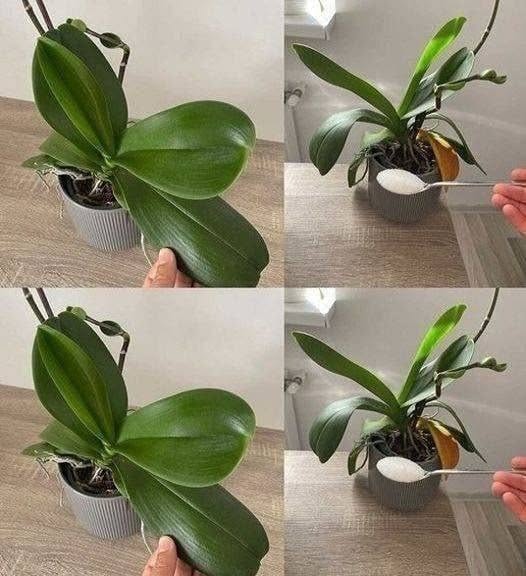
That claim is misleading. There is no “one tablespoon miracle fertilizer” that makes orchids bloom continuously.
Orchids (like most flowering plants) have natural blooming cycles, and even with perfect care they do not bloom nonstop year-round.
That said, there is a simple, safe way people refer to when they say this: a very diluted, regular feeding routine using common orchid fertilizer.
🌸 What orchids actually need
Most orchids (like Phalaenopsis) are:
- Light feeders (too much fertilizer harms them)
- Sensitive to salt buildup in soil
- Dependent on light, temperature, and rest cycles—not just fertilizer
🧴 The “1 tablespoon” myth explained
Usually, this refers to:
- Liquid orchid fertilizer diluted in water
- Not used at full strength
- Applied in small amounts regularly
👉 The idea is weak, consistent feeding, not a powerful dose.
🌿 Correct feeding method (what actually works)
Instead of “one tablespoon magic,” orchids respond best to:
✔ Weak fertilizer mix
- Use orchid fertilizer at ¼ strength
- Apply every 2–4 weeks during active growth
✔ Flush with water
- Once a month, water thoroughly to remove salt buildup
🌸 Why orchids bloom (real factors)
Blooming depends more on:
- Light (bright, indirect sunlight)
- Temperature changes (cooler nights often trigger flowers)
- Plant maturity
- Rest period after flowering
Fertilizer alone does NOT force continuous blooming.
⚠️ What happens if you overdo it
Too much fertilizer can cause:
- Root burn
- Yellow leaves
- No flowering at all
- Salt buildup in the potting medium
🧠 Bottom line
- “One tablespoon = continuous blooms” ❌ myth
- “Light, regular feeding + proper conditions” ✔ real method
If you want, I can give you a simple orchid care schedule that actually triggers repeat blooming (light, watering, and temperature included)—that’s what really makes orchids flower again.
