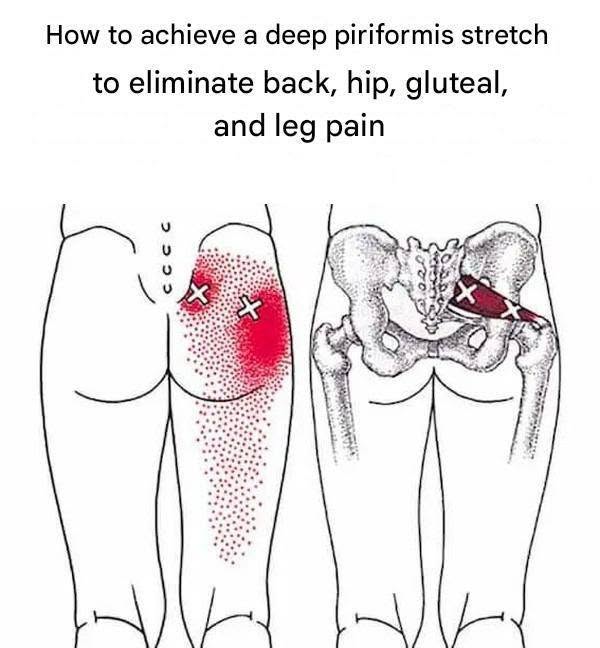
Piriformis stretches can help relieve symptoms associated with piriformis syndrome, a condition where the piriformis muscle in the buttock area becomes tight or irritated and may contribute to sciatic nerve discomfort. Stretching should feel like a gentle pull in the buttock—not sharp pain, numbness, or increased tingling.
1. Figure-4 (Supine Piriformis) Stretch
- Lie on your back with both knees bent.
- Cross your right ankle over your left knee (making a “4” shape).
- Pull your left thigh toward your chest.
- Hold for 20–30 seconds.
- Repeat on the other side for 2–4 rounds.
2. Seated Piriformis Stretch
- Sit upright in a chair.
- Place one ankle over the opposite knee.
- Keep your back straight and gently lean forward.
- Hold 20–30 seconds, then switch sides.
3. Supine Knee-to-Opposite-Shoulder Stretch
- Lie on your back.
- Bring one knee toward your chest.
- Guide it gently toward the opposite shoulder.
- Hold 20–30 seconds and repeat.
4. Pigeon Pose (Gentle Version)
- Start on hands and knees.
- Bring one knee forward and extend the opposite leg behind you.
- Keep your hips squared and lower only as far as comfortable.
- Hold 20–45 seconds.
5. Hip External Rotation Stretch
- Lie on your back with knees bent.
- Let one knee fall outward while keeping the opposite hip stable.
- Hold briefly, then return to the starting position.
Helpful tips
- Warm up with a short walk or gentle movement before stretching.
- Stretch consistently rather than aggressively.
- Strengthening the glutes and hip stabilizers can also help reduce recurring irritation.
- Avoid prolonged sitting; take movement breaks if sitting triggers symptoms.
Seek medical advice if you have progressive weakness, loss of bladder or bowel control, numbness in the groin/saddle area, severe or worsening pain, or symptoms after a significant injury.
If you’d like, I can also provide a 10-minute daily piriformis syndrome routine (stretch + strengthening).
