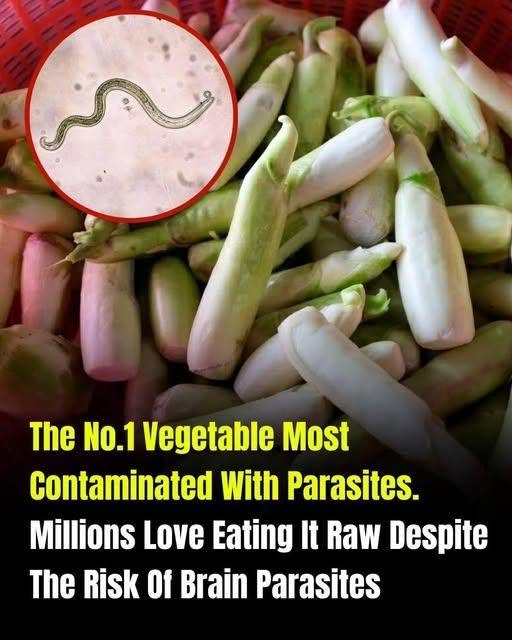
The headline “The Vegetable Most Likely To Carry Parasites Is Also One Many People Love Eating Raw” is misleading. There is no single vegetable that is universally “most likely” to carry parasites.
What is true is that raw vegetables can sometimes become contaminated with parasites, bacteria, or viruses through contaminated soil, water, manure, or handling. The risk depends more on how the food is grown, washed, and prepared than on the vegetable itself.
Vegetables that deserve careful washing include:
- Leafy greens (such as lettuce and spinach), because their many folds can trap dirt and microbes.
- Fresh herbs, which can also be difficult to clean thoroughly.
- Other vegetables eaten raw, depending on how they were grown and handled.
How to reduce your risk
- Wash vegetables thoroughly under running water before eating or preparing them.
- Remove damaged outer leaves from leafy vegetables.
- Keep raw produce separate from raw meat, poultry, and seafood.
- Refrigerate perishable produce promptly.
- If you’re at higher risk of severe foodborne illness (such as during pregnancy or if you have a weakened immune system), follow any additional food safety advice from your healthcare provider.
Bottom line
Raw vegetables are an important part of a healthy diet for most people. The key is proper washing and safe food handling, not avoiding vegetables because of alarming headlines. There is no good evidence that one commonly eaten vegetable is uniquely “full of parasites.”
