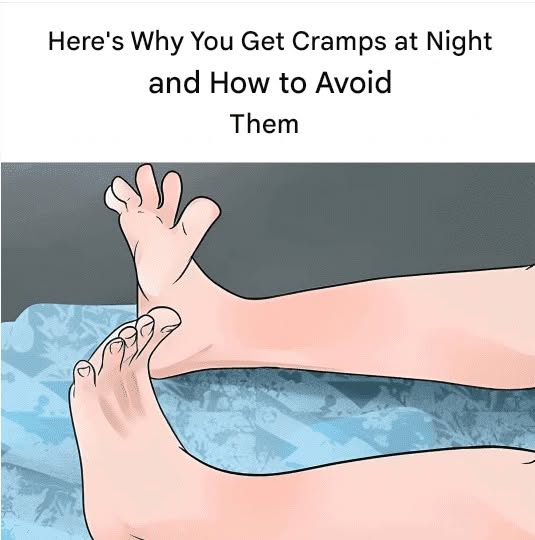
Why Do We Get Cramps at Night?
Nighttime leg cramps are sudden, painful muscle contractions that usually affect the calf, but they can also occur in the feet or thighs. They often last from a few seconds to several minutes, and the muscle may remain sore afterward.
In many cases, the exact cause isn’t known, but several factors can increase the likelihood of night cramps.
Common Causes and Risk Factors
1. Muscle fatigue
Overusing your muscles during the day or starting a new exercise routine can make cramps more likely at night.
2. Sitting or standing for long periods
Remaining in one position for extended periods may contribute to muscle cramping in some people.
3. Dehydration
Not drinking enough fluids can contribute to muscle cramps, particularly after exercise or in hot weather.
4. Pregnancy
Night leg cramps are common during pregnancy, especially in the second and third trimesters.
5. Certain medications
Some medications have been associated with muscle cramps in some people. If cramps began after starting a new medication, discuss it with your healthcare provider rather than stopping it on your own.
6. Medical conditions
Night cramps may be more common in people with:
- Diabetes
- Kidney disease
- Thyroid disorders
- Peripheral artery disease
- Nerve disorders
7. Older age
Nighttime leg cramps become more common as people get older, although they are not an inevitable part of aging.
What You Can Do
- Stretch the affected muscle. For a calf cramp, straighten your leg and gently pull your toes toward your shin.
- Massage the muscle gently.
- Walk around for a few minutes if you’re able.
- Apply heat, such as a warm towel or heating pad, to help the muscle relax.
- Stay hydrated, especially if you’ve been sweating or exercising.
Can Magnesium Help?
Magnesium supplements are often promoted for leg cramps, but research has not consistently shown that they help most people with ordinary nighttime leg cramps. They may be appropriate if you have a confirmed magnesium deficiency or in certain situations, but they are not a universal treatment.
When to See a Doctor
Arrange a medical evaluation if your cramps:
- Occur frequently or are very severe
- Wake you up regularly
- Are accompanied by muscle weakness
- Are associated with swelling, redness, or warmth in the leg
- Begin after starting a new medication
- Persist despite self-care measures
Bottom line
Most nighttime leg cramps are not a sign of a serious illness and often improve with stretching, hydration, and addressing contributing factors. If they become frequent, severe, or are accompanied by other concerning symptoms, it’s worth discussing them with a healthcare professional to look for an underlying cause.
