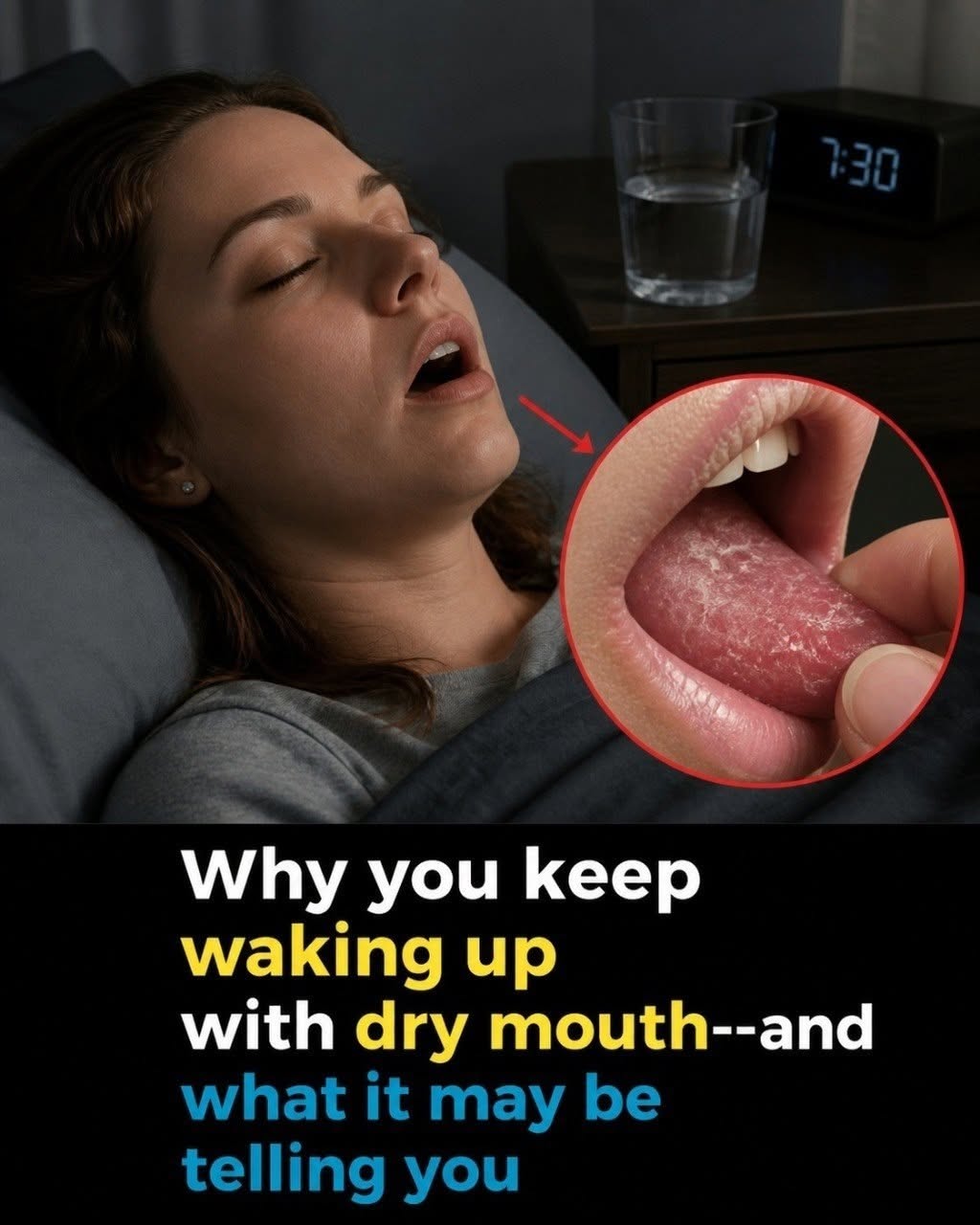
Waking Up With Dry Mouth? Here’s What Your Body Might Be Telling You
Waking up with a dry mouth is common, but it can be a clue that something is affecting your saliva production, breathing, hydration, or health. The cause is often harmless, but ongoing dryness should not be ignored.
1. You may be breathing through your mouth at night
- A blocked nose, allergies, snoring, or sleeping with your mouth open can dry the tissues in your mouth and throat.
2. You may not be drinking enough fluids
- Dehydration can reduce saliva production and make your mouth feel dry, sticky, or uncomfortable in the morning.
3. Your bedroom air may be too dry
- Heating, air conditioning, or low humidity can increase moisture loss while you sleep.
4. Your medications may be contributing
- Many medicines can cause dry mouth, including some allergy medicines, antidepressants, blood pressure medicines, and pain medications.
5. You may have sleep-related breathing issues
- Dry mouth along with loud snoring, pauses in breathing during sleep, morning headaches, or daytime sleepiness may be linked to sleep apnea.
6. Caffeine, alcohol, or tobacco may play a role
- These can affect hydration and saliva production in some people.
7. It may be related to blood sugar changes
- Persistent dry mouth combined with increased thirst, frequent urination, fatigue, or unexplained weight loss can be a reason to check blood sugar levels.
What can help:
✅ Drink enough water during the day
✅ Address nasal congestion or allergies
✅ Use a humidifier if the air is dry
✅ Maintain regular brushing, flossing, and dental checkups
✅ Review medications with a healthcare professional if symptoms persist
See a healthcare professional if:
- Dry mouth continues for several weeks
- You develop mouth sores, difficulty swallowing, or frequent cavities
- You have excessive thirst, frequent urination, or unexplained fatigue
- You have signs of possible sleep apnea
A dry mouth is a symptom, not a diagnosis—the key is finding what is causing it.
