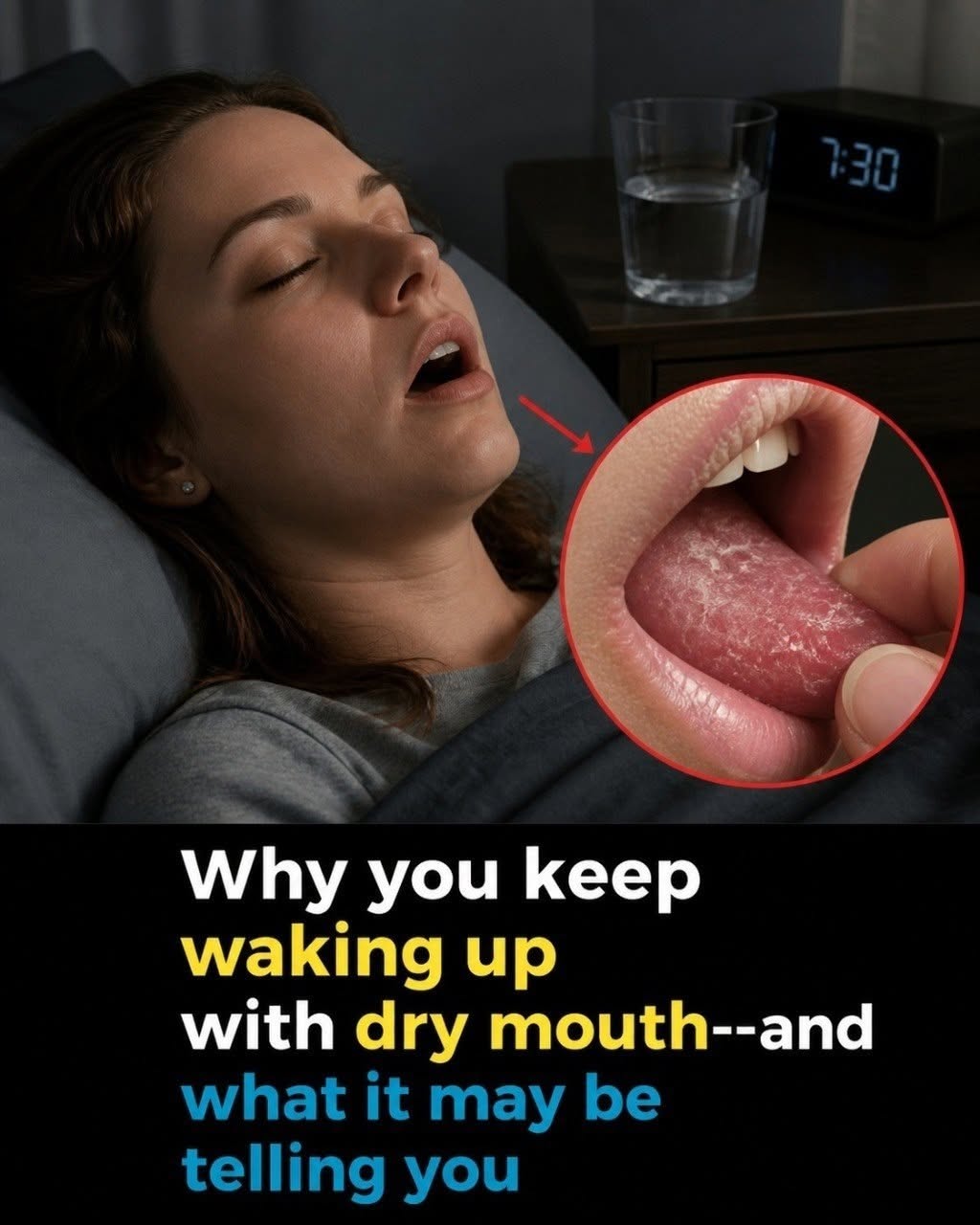
Waking up with a dry mouth can be your body’s way of signaling that something is affecting saliva production, breathing during sleep, hydration, or medication effects. It is common, but if it happens often, it is worth paying attention to.
7 possible reasons you wake up with a dry mouth
- You’re breathing through your mouth while sleeping
- Mouth breathing can happen because of nasal congestion, allergies, a blocked nose, or sleeping position. It allows saliva to evaporate overnight.
- Snoring or sleep apnea
- People with sleep apnea may breathe through their mouth during sleep. Warning signs include loud snoring, gasping or choking at night, morning headaches, and daytime tiredness.
- Dehydration
- Not drinking enough fluids during the day, sweating, illness, or alcohol intake can reduce saliva production.
- Medication side effects
- Many medicines can cause dry mouth, including some allergy medicines, antidepressants, blood pressure medicines, and medications for sleep or anxiety.
- High blood sugar
- Dry mouth can occur with diabetes, especially when combined with increased thirst, frequent urination, fatigue, or unexplained weight changes.
- Alcohol, smoking, or too much caffeine
- These can contribute to dehydration and may reduce normal saliva flow.
- Dry air in your bedroom
- Heating or air conditioning can reduce humidity and worsen nighttime mouth dryness.
Ways to reduce morning dry mouth
- Drink enough water throughout the day
- Keep your bedroom air comfortably humid if it is dry
- Address nasal congestion or allergies
- Avoid alcohol close to bedtime
- Maintain good dental hygiene and regular dental visits
Talk to a healthcare professional if:
- Dry mouth continues for several weeks
- You have trouble swallowing, mouth sores, or frequent cavities
- You snore loudly or wake up gasping for air
- You have excessive thirst and frequent urination
Persistent dry mouth is worth checking because it can affect oral health and may sometimes point to an underlying condition.
