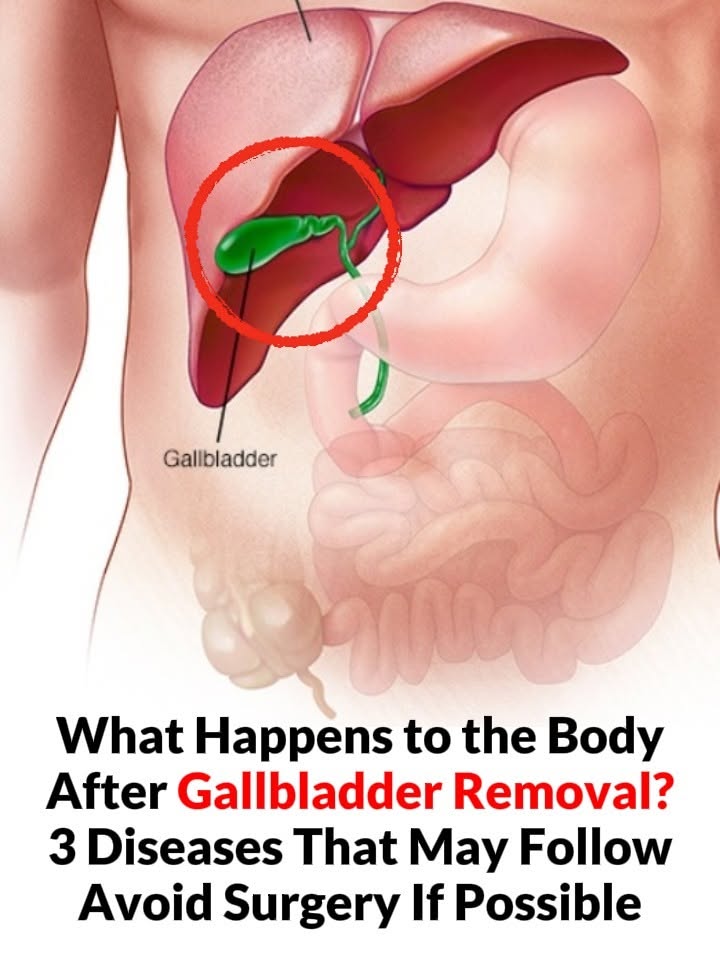
What Happens After Gallbladder Removal? Separating Facts from Fear
The headline “3 diseases may follow—avoid surgery if possible” is misleading. While gallbladder removal (cholecystectomy) can have side effects and isn’t needed in every case, it is a common and generally safe operation. For people with certain conditions—such as recurrent painful gallstones, gallbladder inflammation, or some complications—surgery may be the recommended treatment and can prevent serious problems.
What does the gallbladder do?
The gallbladder stores and concentrates bile, which helps digest fats. After it’s removed:
- Your liver still makes bile.
- Instead of being stored, bile flows directly into the small intestine.
- Most people digest food normally after recovery.
Possible changes after surgery
1. Diarrhea or loose stools
- Some people develop diarrhea, especially in the first weeks or months.
- It often improves over time.
- Eating smaller meals and limiting very fatty foods can help.
2. Bloating or indigestion
- Some people notice gas, bloating, or discomfort after large or high-fat meals.
- Gradually reintroducing foods and choosing a balanced diet may reduce symptoms.
3. Rare bile acid–related diarrhea
- A small number of people have persistent diarrhea caused by excess bile acids reaching the colon.
- This can often be treated with prescription medication if needed.
Does gallbladder removal cause other diseases?
There is no strong evidence that gallbladder removal directly causes three specific diseases in most people. Some studies have found associations with certain digestive conditions, but an association does not prove that surgery causes them. Most people recover well and continue to live healthy lives.
Can surgery be avoided?
Sometimes. It depends on the reason surgery is being considered.
Surgery may not be needed for:
- Gallstones that cause no symptoms.
- Some mild conditions that improve with medical treatment and lifestyle changes.
Surgery is often recommended for:
- Recurrent painful gallstone attacks.
- Acute gallbladder inflammation.
- Gallstone-related pancreatitis.
- Certain other gallbladder complications.
After gallbladder removal
Many people can return to a normal diet, though it may help to:
- Eat smaller, more frequent meals at first.
- Limit very high-fat or fried foods during recovery.
- Eat plenty of fiber, increasing it gradually.
- Stay hydrated.
Bottom line
Gallbladder removal is not appropriate for everyone, but it is also not something to avoid at all costs. When recommended for the right reasons, it can relieve symptoms and prevent serious complications. If you’ve been advised to have your gallbladder removed, discussing the benefits, risks, and alternatives with your surgeon is the best way to make an informed decision.
