What Happens to the Body After Gallbladder Removal?
The headline “3 diseases may follow—avoid surgery if possible” is misleading. Gallbladder removal (cholecystectomy) is one of the most common abdominal operations and is generally safe. For people with recurrent painful gallstones, gallbladder inflammation, or certain complications, it can prevent serious illness.
What changes after gallbladder removal?
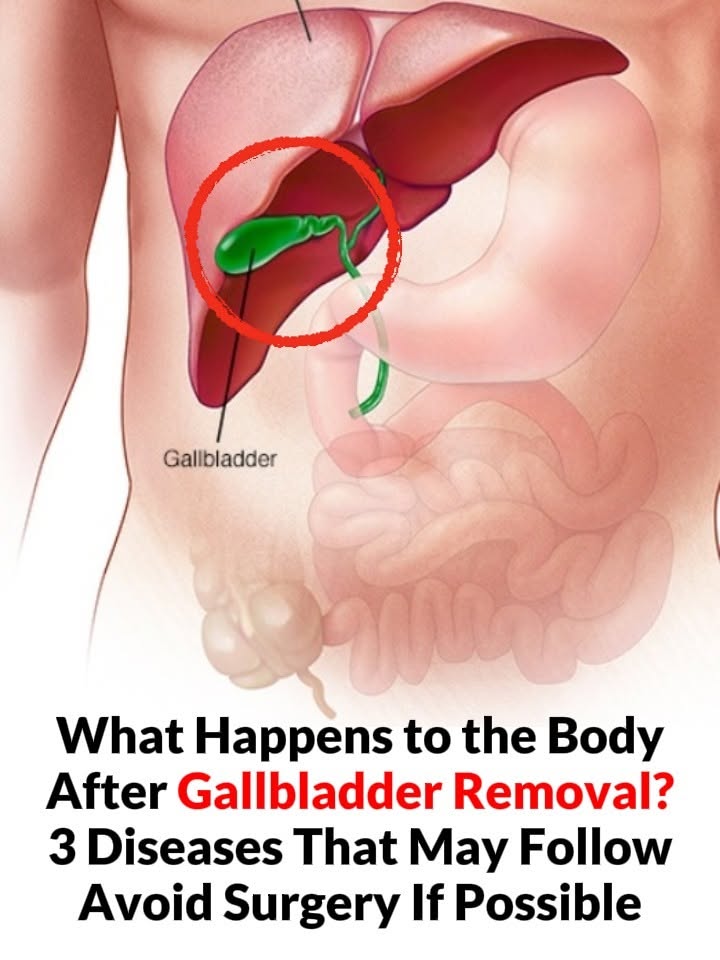
The gallbladder stores bile made by the liver. After surgery:
- Your liver continues to produce bile.
- Bile flows directly into the small intestine instead of being stored.
- Most people digest food normally after recovery.
Common effects after surgery
1. Diarrhea or loose stools
- Some people have diarrhea for a few weeks or months.
- It usually improves over time.
- Eating smaller meals and limiting very fatty foods may help.
2. Bloating or indigestion
- Gas or discomfort after rich meals can occur, especially early in recovery.
3. Difficulty tolerating high-fat meals
- Large, fatty meals may cause digestive symptoms because bile is no longer released in concentrated amounts.
Does gallbladder removal cause other diseases?
There is no good evidence that the operation directly causes three specific diseases in most people. Some studies have found associations with certain digestive conditions, but that does not mean the surgery causes them. Most people recover well and have long-term relief from gallbladder symptoms.
Can surgery be avoided?
Sometimes—but it depends on the situation.
Surgery may not be needed if:
- Gallstones are found by chance and cause no symptoms.
- Symptoms are mild and another cause is identified.
Surgery is often recommended if you have:
- Recurrent painful gallstone attacks.
- Acute gallbladder inflammation.
- Gallstone-related pancreatitis.
- Certain blockages or other gallbladder complications.
Tips after surgery
- Eat smaller, more frequent meals at first.
- Gradually return to a normal, balanced diet.
- Limit very fatty or fried foods during recovery if they trigger symptoms.
- Stay hydrated and include fiber gradually to help normalize bowel habits.
Seek medical advice if you develop:
- Persistent severe abdominal pain
- Fever or chills
- Yellowing of the skin or eyes
- Persistent vomiting
- Ongoing diarrhea lasting several weeks or causing dehydration
Bottom line: Gallbladder removal is not necessary for everyone, but it is also not something to avoid at all costs. When recommended for the right reasons, it can relieve symptoms and reduce the risk of serious complications. The decision should be based on your symptoms, test results, and a discussion with your healthcare professional.
