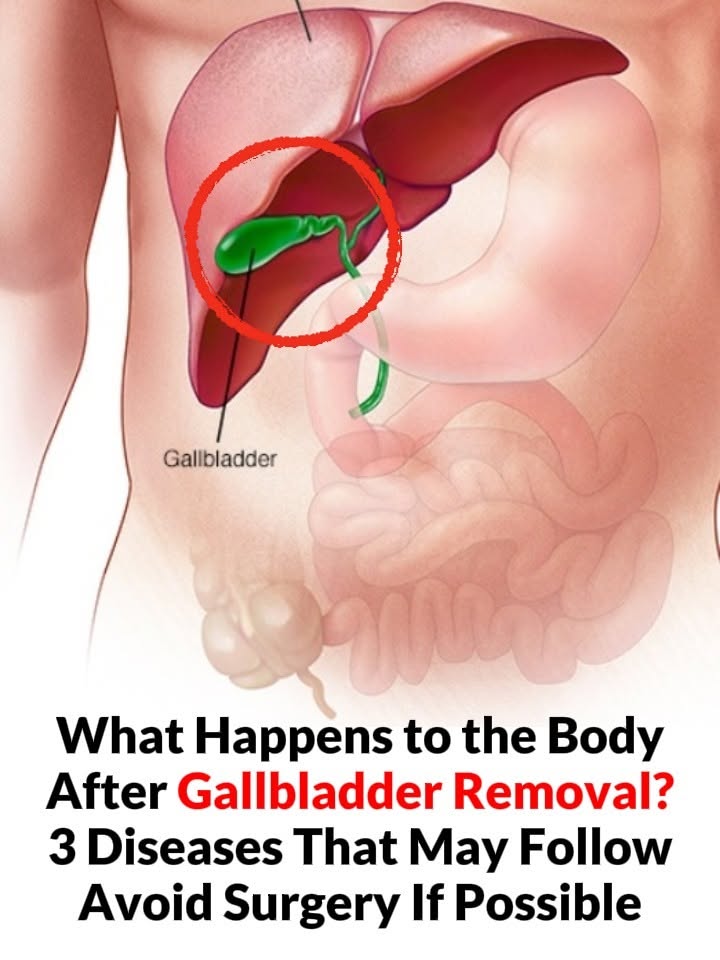
The headline “What Happens to the Body After Gallbladder Removal? 3 Diseases That May Follow – Avoid Surgery If Possible” is misleading and unnecessarily alarming.
Gallbladder removal (called a cholecystectomy) is one of the most common surgeries worldwide. Most people recover well and live normal lives without a gallbladder.
The gallbladder stores bile made by the liver. After surgery, bile flows directly from the liver into the small intestine instead of being stored.
What can happen after gallbladder removal?
Many people have no long-term problems. Some may experience temporary digestive changes, such as:
- Diarrhea
- Bloating
- Gas
- Difficulty digesting large, fatty meals
These symptoms often improve over weeks or months.
Are there “3 diseases” that always follow?
No. Gallbladder removal does not inevitably cause new diseases. However, some people may develop or continue to have:
- Post-cholecystectomy syndrome
- Ongoing abdominal pain or digestive symptoms after surgery. It has several possible causes and is not experienced by most people.
- Bile acid diarrhea
- A small percentage of people have persistent diarrhea caused by bile reaching the intestine more continuously. Effective treatments are available.
- Digestive symptoms from another condition
- Sometimes symptoms thought to be caused by the gallbladder were actually due to another digestive disorder that continues after surgery.
Should you “avoid surgery if possible”?
It depends on the situation.
If you have:
- Recurrent painful gallstones
- Gallbladder inflammation
- Gallstone-related pancreatitis
- Other gallbladder complications
Surgery is often the recommended treatment because it can prevent serious complications. Delaying needed surgery may increase the risk of infection, pancreatitis, or blockage of the bile ducts.
If gallstones are present but aren’t causing symptoms, surgery is often not recommended.
Bottom line: Gallbladder removal is generally safe and effective when medically indicated. While some people experience digestive changes afterward, the claim that surgery commonly leads to three diseases or should be avoided whenever possible is not supported by current medical evidence. Decisions about surgery should be based on your specific condition and a discussion with your healthcare professional.
